Learning from Berlin, New York, and Zurich

On Friday, October 24, 2014 at 2pm, Columbia University GSAPP is hosting the symposium "Housing Beyond the Market: Learning from Berlin, New York, and Zurich." Below is more information and a program for the afternoon symposium.


[Image: Duplex Architekten, Zurich]

About:
Organized by Hilary Sample and Susanne Schindler

Housing Beyond the Market“ brings the architects of recently completed non-profit housing developments in Berlin and Zurich together with local architects and policymakers to discuss the viability of similar models for New York City.

New York City is in the midst of a housing crisis. The generation of sufficient housing for low- to middle-income households is made ever more difficult by increased and changing demand, limited financing and available land, as well as challenging public health issues ranging from an aging population to climate change. The limits of relying on a purely market-driven model to produce this housing are becoming apparent: more apartments are currently ageing out of income- and price-restrictions than are being generated by the city's affordable housing programs.

Beyond New York, other high-priced and rapidly growing cities, including Berlin and Zurich, have made models of permanently non-profit housing a central part of their policy. Limited-equity cooperatives are just one example. These cities have put into place structures for land-use and financing that encourage well-designed forms of healthy urban housing, and emerging architects have frequently been instrumental in initiating and moving the processes forward.

In this afternoon conversation, four architects will present their work within the context of their cities' housing policies, offering up critical points for discussion with local policy makers. Is New York City ready to design affordable housing that can exist beyond the speculative cycles of the market? With renewed interest in finding successful housing models, the session will challenge accepted norms to address the urban housing crisis.
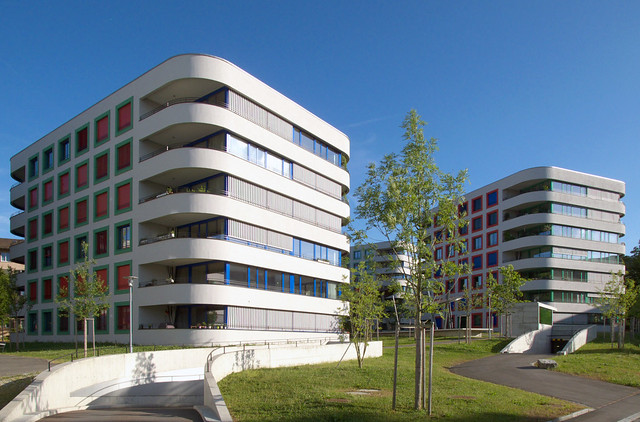
Sunnige Hof
[Sunnige Hof, Burkhalter Sumi. Photo: John Hill]

Program:
2:00 Welcome and Introduction
Hilary Sample, Associate Professor, and Susanne Schindler, Adjunct Professor, GSAPP

2:15–3:45 Panel I: New York: Berlin, or: Creating a Pilot

2:15 Antje Buchholz and Jürgen Patzak-Poor, BAR Architekten:
"Baugruppe Oderberger Strasse and Spreefeld Cooperative"

2:55 Response: Eric Bunge, nArchitects, New York

3:10 Response: HUD/NYS/NYC policymaker tbc

3:25 Discussion with speaker and respondents
Moderated by Matthew Lasner, Professor of Urban Affairs and Planning, Hunter College / Author of High Life: Condo Living in the Suburban Century

3:45–5:15 Panel II: New York: Zurich, or: Scaling It Up

3:45 Anne Kaestle, Duplex Architekten, Zurich
"Mehr als Wohnen"

4:25 Response: Chris Sharples, SHOP

4:40 Response: HUD/NYC/NYC policymaker tbc

4:55 Panel discussion with speaker and respondents
Moderated by Brian Loughlin, Special Adviser to the Mayor of Jersey City for Housing / Professor of Architecture, Marywood University

5:15–5:45
Closing Panel with all participants
Moderated by Susanne Schindler

Climbing Starchitecture

Not since two daredevils scaled Renzo Piano's New York Times building in 2008 have I heard controversy about people climbing buildings designed by well known architects. The latest news is in regards to Shigeru Ban's Aspen Art Museum, which one must admit looks inviting to climb:

[Photo by Jim Kehoe]

The museum certainly knew that people might try to climb the basket-weave facade made of Prodema, so they installed a sign:


[Photo by Jim Kehoe]


But that sign has not stopped one person – Aspen resident William Johnson – from trying to climb the building after "he had three or four beers"; two college students – Cooper Means and Lauren Twohig – from posing for a photo by the sign and getting in trouble with security, even though they denied they were going to climb any higher; and one person – Aspen artist Lee Mulcahy – from "offering $500 to anyone who climbs at least three-quarters of the way up the building."

Of the above incidents and offer, all part of this Aspen Times article, the last two are most interesting because they are a means of criticizing the building's design and the museum's administration. It's no secret that many Aspen residents hate the building. In the case of Cooper Means, a design student, he said, "It’s the worst thing to happen to Aspen since I was born there. ... It wasn’t designed as a part of the town."

Mulcahy, on the other hand, is banned from the museum, "because of an incident in November 2011 in which museum officials alleged that he placed 'For Sale' signs around the future site." He disagrees with a sculpture outside the museum that reads "WITH LIBERTY AND JUSTICE FOR ALL," saying it is, "Liberty and justice for all, except for artists and others banned for disagreeing with the museum’s policies."

So unlike the Times building climbers, who did it for the thrill, here we have people drawing attention to what they see as faults of the building and the institution. A bit humorous, to be honest, but I'm guessing these will not be the last incidents we hear about people climbing the basket weave facade, even though the Aspen Art Museum has a "zero-tolerance policy for climbing the wall."

More Chicago

Here are some more photos from my week in and around Chicago, all via my Instagram feed.

IN THE CITY

Mansueto Library at University of Chicago by JAHN:


Logan Center at University of Chicago by TWBTA:


Morgan Street Station by Ross Barney Architects:


235 Van Buren by Perkins + Will:


William Jones College Prep by Perkins + Will:


Spertus Institute by Krueck + Sexton:


Coyne College by Booth Hansen:


Law Firm by 4240 Architecture:


Langham Hotel by Rockwell Group:


IN THE SUBURBS

Serta International HQ by Epstein Metter:


Dining Pavilion at Ravinia by Lohan Anderson:


Artist Studio at Ragdale Foundation by IIT Design Build:


Buru Buru pavilion at Ragdale Foundation by Bittertang: